BrightonSEO 2026: everyone talks about AI, nobody from AI talks about SEO

TL;DR
- I went to BrightonSEO for the third time. Two days almost entirely about GEO and AI search - and not one person from OpenAI, Anthropic or Google explaining what actually makes a site succeed in their engines.
- We optimise for black boxes whose owners never take the stage to explain the rules. So, in the same rooms, people admitted AI visibility metrics are lying and attribution is in crisis.
- The programme needed advanced, hands-on sessions with tools, tests and results. It had too many beginner panels.
- While nobody gives you the rules, anchor on the observable: logs, first-party tests, honest measurement. Don't buy stage hacks.
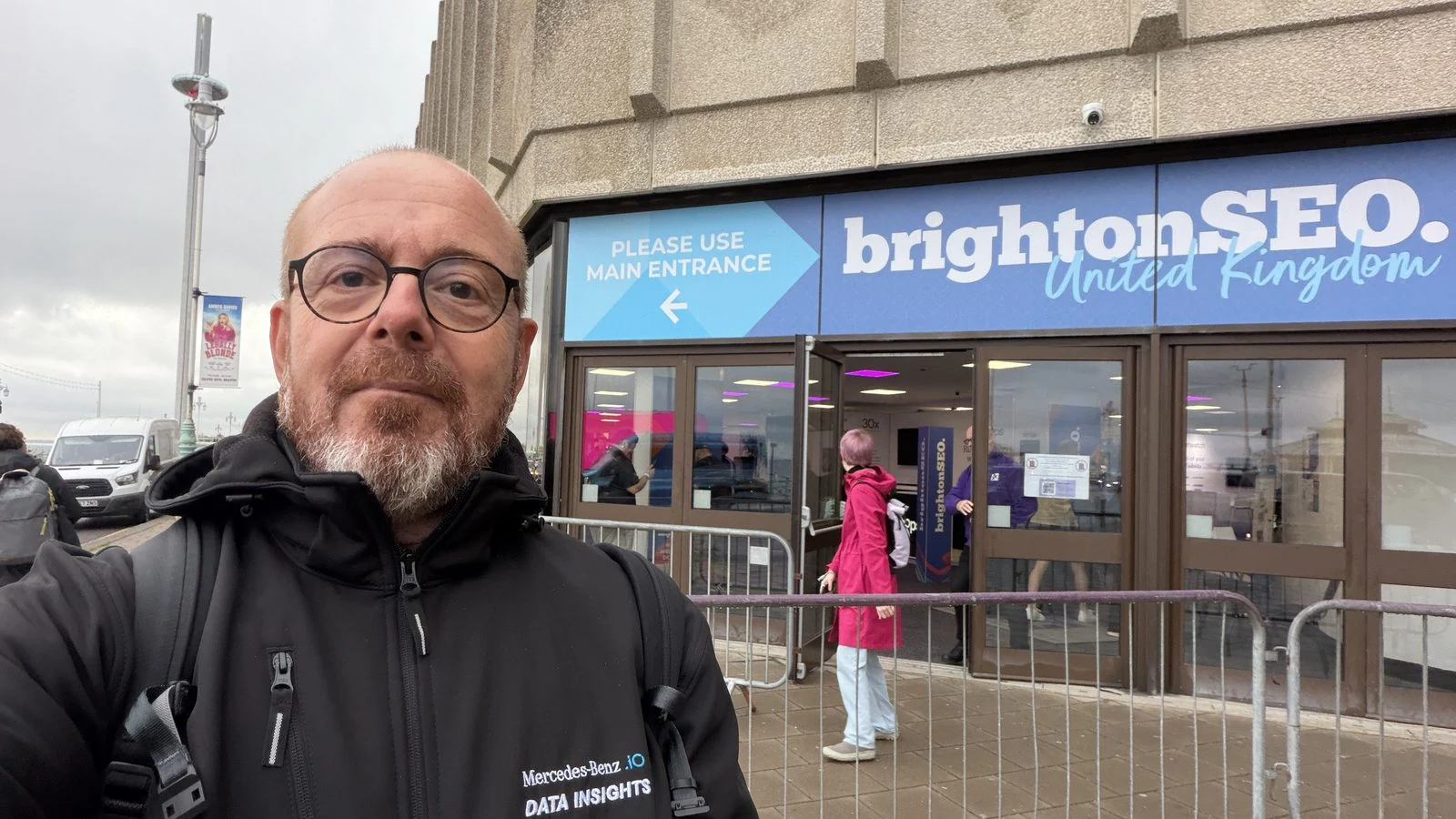
I went to BrightonSEO for the third time and left with a question nobody on stage asked: if everyone talks about AI, why was nobody from AI there? Two days, dozens of GEO talks, and not one person from OpenAI, Anthropic or Google telling us what actually makes a site succeed in their engines. A whole room optimising for black boxes whose owners never come to explain the rules. Brighton kept to the script - rain, wind and, in between, some bright spells -, but the most important chair stayed empty.
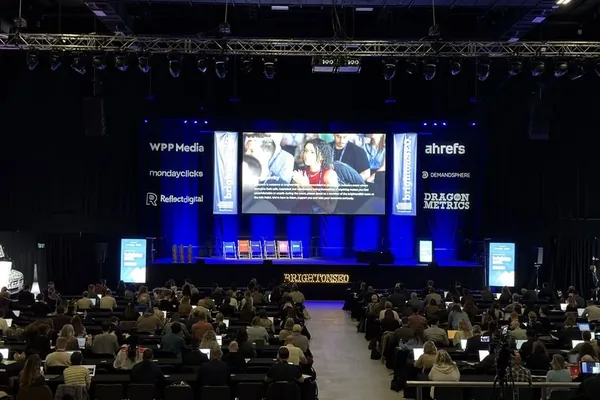
The empty chair at BrightonSEO 2026
The stage was saturated with AI. Ross Simmonds's keynote was about "engineering your brand into the memory layer of every LLM"; there were talks on the "new citation economy" and on analysing a million products in ChatGPT Shopping. I watched dozens of SEO professionals talk about AI with real competence. What I did not see was the other side of the table: nobody from AI talking about SEO.
It sounds like a detail and it is not. The people who build the engines are the ones who know what makes them cite one source over another. Without that voice in the programme, the community is left reverse-engineering systems that change on their own - and selling conclusions with a confidence the data does not support.
Why that leaves you guessing
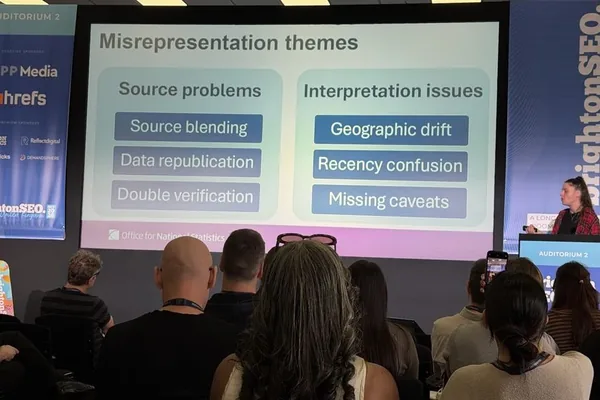
When you optimise for a black box, all you can do is watch the outside and infer. That is why, in the very rooms selling GEO, the honesty kept leaking through: one talk was bluntly titled "your AI visibility metrics are lying to you"; a whole panel was about "the great attribution crisis". This is not hallway pessimism - it is the industry itself admitting it measures in the dark.
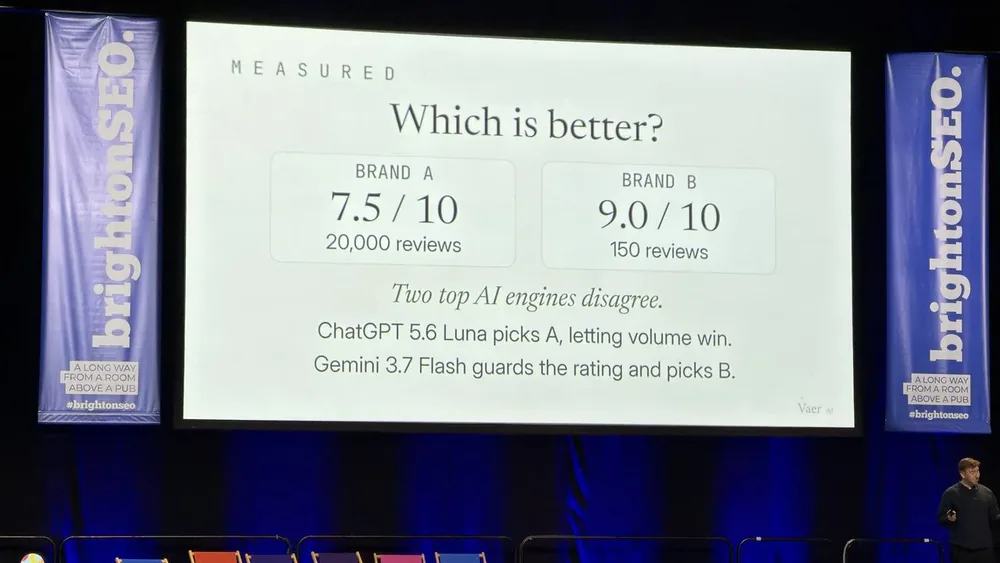
This slide stuck with me. If two top engines give 7.5 and 9.0 to the same thing, your absolute "citation rate" is an illusion of precision. That is not an argument against measuring; it is an argument for measuring by trend and range, never by an exact number - as I argued in proving the value of GEO.
Too much beginner, too little hands-on
My read after three editions: the programme swings between very beginner panels and some intermediate ones, but the top step is missing. It needs advanced, hands-on sessions with tools, tests and results on the table - not opinions, not frameworks drawn in the air. The exception that proved the rule was a talk on a 30-day log file analysis: "log files don't lie". That is the kind of rigour that should dominate a stage like this.
For you, the reader, it becomes a practical ruler: judge any GEO promise by one question - "show me the test and the result". Whoever has no test has confidence; and confidence is not a method.


What to do while nobody gives you the rules
If the engine owners will not come and explain the game, you stop chasing the stage "hack" and anchor on what you can observe and repeat. Three things: your logs, to know who crawls what; first-party tests on a fixed prompt set, run by you; and honest measurement of what AI brings, with the caveats said out loud. It is slower and less sexy than a keynote. It is also the only part nobody can contradict next quarter.
What I bring back from Brighton
I bring confirmation that the industry has matured in the question and stayed immature in the answer: everyone now accepts that search changed, few can prove it. And I bring the absence that bothered me most - until the engine owners sit at this table, anyone promising "guaranteed GEO" is selling the map of a territory nobody has charted. Your edge, in 2026, is not knowing the trick you heard in Brighton. It is measuring better than whoever just repeats it.
Sources
Frequently asked questions
Is BrightonSEO worth attending?
Yes, for the density of content and the networking - but go with a filter. Seek out the talks with tests and results and skip the hype. The value is in the sessions that show method, not the ones that show pretty slides. See how to measure GEO properly →
Why don't AI companies attend SEO conferences?
I have no official answer, so take this as my read: they have little incentive to reveal what decides inclusion, and SEO is, for them, a channel they neither control nor monetise directly. The practical result is the same - the community optimises without the manual. See SEO vs GEO →